
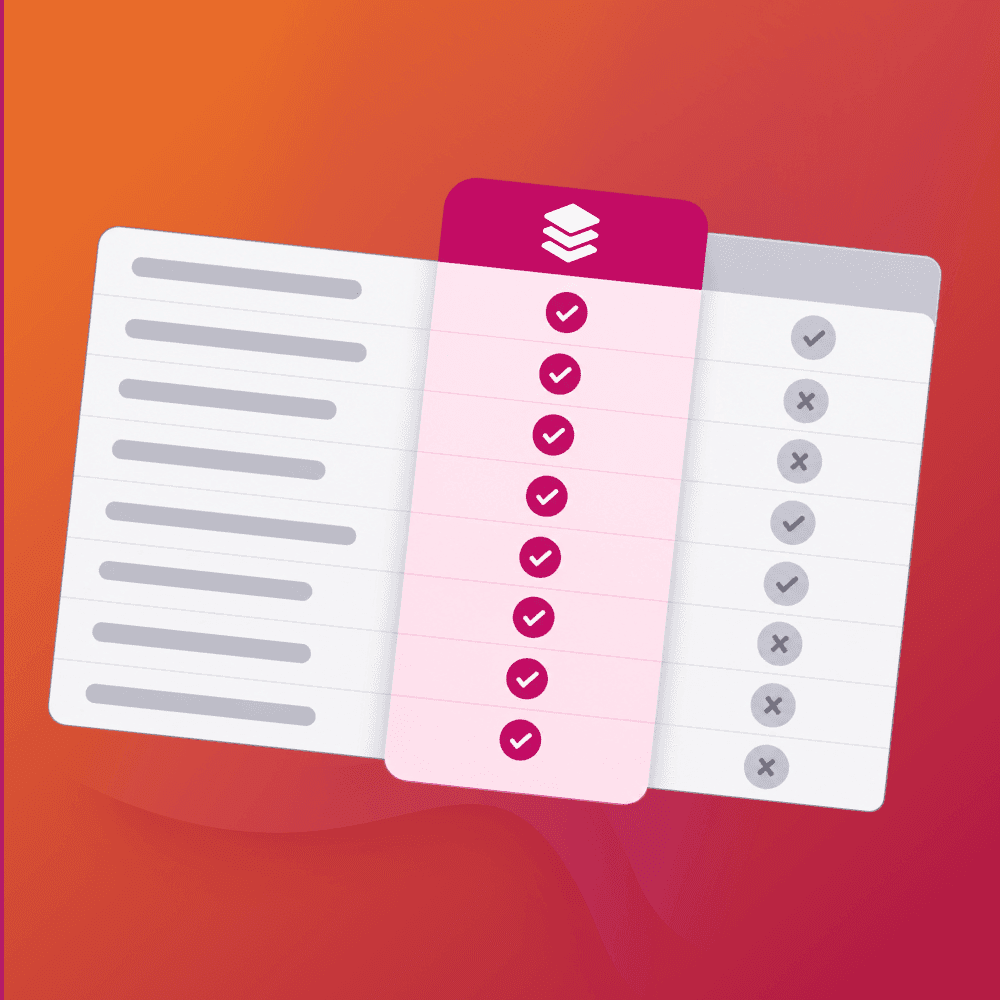
If you have been shortlisting accounts payable software, you will have run into the same handful of names: ApprovalMax, Lightyear and Dext, plus a longer tail of tools that keep appearing in the same search results as Zahara. Each one solves a slightly different problem, and the marketing rarely makes that obvious. This page sets out where Zahara sits against ten of them, what each does well, and which type of finance team each is built for.
Zahara is a UK-built accounts payable automation platform that covers the whole purchase-to-pay process: purchase requests, purchase orders, goods receipting, AI invoice capture, matching, approvals, budgets and supplier payments, connected directly to Xero, Sage 50, Sage 200, Sage Intacct, QuickBooks Online and MYOB. That breadth is the main thing to hold in mind while reading the comparisons below, because most of the tools here cover part of that process rather than all of it.
How we compared them
Every tool below was assessed on the same eight questions, because these are the ones that decide whether a product fits or not:
- Purchase requests and purchase orders: can staff raise a request that becomes an approved PO before money is committed?
- Invoice capture: how are supplier invoices read, and is line-item data extracted?
- Approvals and matching: how flexible are the workflows, and is there two-way and three-way matching to POs and deliveries?
- Budget control: can you set budgets against account codes, departments or projects and see committed spend in real time?
- Expenses and payments: does it handle staff expenses and paying suppliers, or stop at export?
- Integrations: which finance systems does it connect to directly?
- Pricing model: is pricing published, and what drives the cost up?
- Who it is built for: business size, sector and country focus.
Feature details and ownership were checked against each vendor's own website and their listings on Capterra and GetApp in September 2026. Software changes quickly, so treat the comparison table as a starting point for your own demos rather than the final word.
Zahara as an ApprovalMax Alternative
ApprovalMax is an approval layer that sits on top of your accounting software. It connects to Xero, QuickBooks Online and NetSuite, pulls in bills and purchase orders, routes them through multi-step approval workflows, and pushes them back once signed off. It is well liked by accountants and bookkeepers, and its bill-to-PO matching is solid, including many-to-many matching where several bills relate to one order. It has more recently added its own capture and fraud detection features, and it has a long-standing integration with Dext for data entry.
The difference is one of scope. ApprovalMax is built around the objects that already exist in your ledger, so it excels at controlling what gets approved. Zahara starts one step earlier, at the purchase request, and carries the transaction through goods receipting, invoice capture, matching and payment before anything reaches the ledger. That matters if you run projects, sites or departments where budget holders need to check a budget and raise an order themselves, or if you receive goods and want a delivery record to match against.
Choose ApprovalMax if: you run Xero or QuickBooks Online, your purchasing is simple, and you mainly need bill and PO approvals with a clean audit trail. Its pricing is flat per organisation, which works well for accountancy practices managing several clients.
Choose Zahara if: you need requisitions, budgets, goods receipting and three-way matching alongside approvals, you use Sage 50, Sage 200, Sage Intacct or MYOB as well as Xero or QuickBooks, or you want invoice capture, expenses and supplier payments in the same platform.
Zahara as a Lightyear Alternative
Lightyear is the closest like-for-like alternative in this list. Founded in Belfast, it offers purchase orders, line-item invoice extraction, customisable approval workflows, three-way matching, automated price checking against agreed supplier pricing and supplier statement reconciliation. It integrates with Xero, QuickBooks Online, Sage, MYOB, NetSuite and AccountsIQ, does not charge per user, and has a strong following in hospitality, where statement reconciliation and price checking against supplier lists are daily concerns. Lightyear was acquired by The Access Group in 2024 and now sits inside the Access ERP division.
Where the two differ is emphasis. Lightyear's strengths are on the invoice side: extraction accuracy, statement matching and price verification. Zahara's strengths are on the control side: departmental and project budgets tied to account codes, purchase requests with pre-approval, goods receipting, multi-company workflows, and a mobile app for raising orders and receipting deliveries on site. Zahara also brings supplier payments into the same process, with multi-currency payments handled through Currencies Direct, and pairs with AI Expenses, a separately licensed companion product for staff expense claims.
Choose Lightyear if: you process high volumes of multi-line supplier invoices, statement reconciliation is a monthly headache, and you are comfortable with a product that is now part of a larger ERP group.
Choose Zahara if: spend control before the invoice arrives is the priority, you run budgets across projects or sites, or you want an independent UK vendor with UK-based support and a free 30-day trial to test against your own process.
Zahara as a Dext Alternative
Dext (formerly Receipt Bank) is a bookkeeping data capture tool. It is excellent at what it does: photograph or email a receipt or invoice, have it read, coded and pushed into Xero, QuickBooks Online or Sage. It was acquired by IRIS Software Group in December 2024, and in 2024 it merged Dext Prepare, Precision and Commerce into one platform and added integrated approvals, mileage tracking and supplier statement extraction.
Dext is not a purchase-to-pay system, and it does not try to be. There are no purchase requests, no purchase orders, no goods receipting and no budget control. Its approvals are designed for a small business or practice signing off bills after the fact, not for a multi-site organisation routing orders by value, department and project. Many finance teams use Dext for capture and something else for control, which is exactly why Dext has a native integration with ApprovalMax.
Choose Dext if: you are a small business or an accountancy practice, your main problem is getting receipts and invoices into the ledger quickly, and approvals are light touch.
Choose Zahara if: you need to control spend before it happens. Zahara's AI invoice processing handles capture, supplier identification and line-item extraction as part of the same workflow that raised the order, so you do not need a separate capture tool.
Comparison table: Zahara and ten alternatives
The table covers the three products above plus seven more that appear alongside Zahara in UK search results for accounts payable and purchasing software.
| Product | Best for | Requests and POs | Invoice capture | Approvals and matching | Budget control | Direct integrations | Pricing model |
|---|---|---|---|---|---|---|---|
| Zahara | UK SMEs and mid-market, multi-site, project-led and charities | Yes, requisition to PO to goods receipt | Yes, AI capture with line items | Multi-step workflows, two-way and three-way matching | Yes, by account code, department and project | Xero, Sage 50, Sage 200, Sage Intacct, QuickBooks Online, MYOB, Pegasus Opera, plus connectors | Published monthly plans from £133 per month, 30-day free trial, no minimum term on monthly plans |
| ApprovalMax | Xero and QuickBooks Online users, accountancy practices | POs raised in ApprovalMax; no goods receipting | Yes, plus Dext integration | Multi-step workflows, bill-to-PO matching | Budget checking | Xero, QuickBooks Online, NetSuite | Flat monthly fee per organisation |
| Lightyear | Invoice-heavy SMEs, hospitality, multi-entity | Yes | Yes, line-item extraction | Workflows, three-way matching, price checking, statement reconciliation | Limited | Xero, QuickBooks Online, Sage, MYOB, NetSuite, AccountsIQ | Tiered by volume, unlimited users |
| Dext | Small businesses and bookkeeping practices | No | Yes, strong receipt and invoice capture | Basic approvals, no PO matching | No | Xero, QuickBooks Online, Sage, others | Subscription per business or per client |
| Tipalti | Mid-market and enterprise with global supplier payments | Yes | Yes | Workflows, two-way and three-way matching | Limited | NetSuite, Sage Intacct, QuickBooks Online, Xero, major ERPs | Quote-based platform fee plus usage |
| Stampli | US-centred mid-market AP teams on ERPs | Yes | Yes, AI-led coding | Workflows with in-invoice collaboration, PO matching | Limited | NetSuite, Sage Intacct, Dynamics, QuickBooks, other ERPs | Quote-based |
| Yooz | High-volume invoice processing, ERP users | Yes | Yes | Workflows and matching | Limited | Wide ERP coverage | Priced by document volume |
| Compleat | UK purchase-to-pay with online buying | Yes, including buying from supplier websites | Yes | Workflows, two-way and three-way matching | Yes | Sage, Xero, QuickBooks Online, Access, others | Modular subscription |
| Moss | Card-first spend management for scale-ups | No, card and invoice based | Yes | Workflows for cards, invoices and claims | Yes | Xero, NetSuite, DATEV, others | Per plan, cards included |
| Access (Access Financials and Lightyear) | Organisations already on Access ERP products | Yes | Yes | Workflows and matching | Yes | Access suite first | Quote-based, sold as part of the suite |
| Esker | Large enterprises on SAP or Oracle | Yes | Yes | Workflows and matching | Yes | SAP, Oracle, Microsoft Dynamics, other enterprise ERPs | Quote-based, enterprise contracts |
"Limited" means the product supports some budget visibility but is not designed around budget-holder purchasing in the way Zahara or Compleat are. Pricing models are as published by each vendor in September 2026 and will change.
The other seven, briefly
Zahara as a Tipalti Alternative
Tipalti's centre of gravity is global payables: paying thousands of suppliers or partners across currencies, with tax form collection and compliance built in. It does include PO management and invoice capture, and it connects to NetSuite, Sage Intacct and other mid-market ERPs. It is a considerable step up in cost and implementation effort, and it makes most sense for businesses whose main problem is outbound payment volume rather than purchasing control. Zahara handles supplier payments too, including multi-currency, but at a price and setup scale suited to UK SMEs and mid-sized organisations.
Zahara as a Stampli Alternative
Stampli is an AP automation platform led by its AI assistant, which codes invoices and lets approvers discuss an invoice directly on it rather than by email. It is well regarded in the US mid-market and integrates deeply with ERPs such as NetSuite and Sage Intacct. UK presence and support are thinner, and purchasing before the invoice is not its focus. If your pain is invoice conversations getting lost, Stampli is worth a look; if it is uncontrolled ordering, Zahara solves that further upstream.
Zahara as a Yooz Alternative
Yooz is a French-headquartered AP automation product that prices by document volume and is aimed at businesses processing large numbers of invoices. It offers capture, workflows, matching and a purchasing module, with broad ERP connectivity. It is a good fit for high-volume invoice operations, less so for organisations whose need is departmental budgets and requisitions across many sites.
Zahara a a Compleat Alternative
Compleat is another UK purchase-to-pay vendor, and it is the product in this list closest to Zahara in ambition: invoice capture, AP automation, approval workflows, two-way and three-way matching, budgets and spend analytics. Its distinctive feature is online buying, which lets staff shop on approved supplier websites and turn the basket into a PO. It sells modularly and has a strong Sage and Access partner presence. The choice between Compleat and Zahara usually comes down to a demo of the approval and budget setup against your own structure, and the strength of the integration with your specific finance system.
Zahara as a Moss Alternative
Moss is a Berlin-founded spend management platform built around corporate cards, with invoice management, reimbursements and budgets layered on top. It is a good fit for scale-ups where most spend goes on cards and the finance team wants receipts chased automatically. It is not a purchase order system, and it does not offer goods receipting or three-way matching. Organisations that buy on account from trade suppliers, run projects or need Sage integration will find Zahara a more natural fit.
Zahara as a Access ALternative
The Access Group appears in search results for accounts payable software through Access Financials, its AP automation modules and, since 2024, Lightyear. If you already run an Access ERP product, the suite route is worth evaluating because the integration is native. If you run Xero, Sage 50, Sage 200, QuickBooks Online or MYOB, Zahara connects directly and does not require you to move onto a suite to get purchasing control.
Zahara as a Esker Alternative
Esker is an enterprise source-to-pay and order-to-cash platform used by large organisations on SAP, Oracle and similar systems. Implementations run to months and budgets to match. It is not a realistic option for most UK SMEs, and it is included here only because it ranks for the same searches. Zahara is designed to be up and running in weeks, not months, at a fraction of the cost.
Which accounts payable software should you choose?
A few honest shortcuts, based on the patterns above:
- You need approvals on top of Xero or QuickBooks and nothing more: ApprovalMax will do the job.
- Your problem is invoice volume, supplier statements and price checking: compare Lightyear and Zahara side by side.
- Your problem is receipts and bills not getting into the ledger: Dext, possibly paired with an approval tool.
- Most spend is on cards: Moss.
- You pay large numbers of global suppliers: Tipalti.
- You are on SAP or Oracle with an enterprise budget: Esker.
- You need to control spend before it is committed, across departments, projects or sites, with invoices, expenses and payments in the same process, on Xero, Sage, QuickBooks or MYOB: Zahara, and Compleat is the other UK product to put on the shortlist.
Zahara is used by organisations including Lush, BA Holidays, Blueprint Gaming, CHD Living and Right at Home to run exactly that process. If that sounds like the shape of your problem, the fastest way to find out is to see it against your own approval structure. Book a demo and bring your current PO and invoice process with you.