


Accounts Payable Automation Software
Control your spend. Cut costs. Grow your bottom line.
Approvals as complex as you need.
And as simple as your sanity requires.

















Why choose Zahara
for AP automation?
The team behind Zahara lives and breathes Accounts Payable Automation, Purchase Orders and hands-free invoice processing. We are an innovative team based in Bath, UK, focused on building practical tools that make finance teams faster, more accurate and more in control.
Zahara is ideal for service-based organisations that buy frequently or need a clear audit trail behind every purchase. Our Accounts Payable platform combines speed, accuracy and robust approval controls to improve visibility, strengthen accountability and help your team work more efficiently.
Six benefits of Zahara
Approvals stuck in inboxes slow everything down. Zahara routes requests automatically to the right people, with reminders, escalation rules and complete visibility over every decision.
Most finance teams only discover problems after the invoice arrives. Zahara helps you control spending before money is committed with purchase requests, approval rules and live budget visibility.
AI Expenses reads receipts automatically, checks claims against your policies and flags unusual spending before finance even reviews the claim. Faster claims. Fewer mistakes. Better control.
Invoices are captured automatically and routed through approval workflows in seconds. Reduce manual entry, speed up processing and improve accuracy across your finance operation.
Track spending across suppliers, departments, projects and teams in real time. With complete audit trails and live reporting, finance teams gain clearer visibility over company costs.
Prepare, review and approve supplier payments with fewer steps and greater control. Zahara helps finance teams manage payment runs more efficiently, including international payments.
Seamless AP automation,
tailored to your finance system.
Zahara connects with the finance tools your team already trusts, including Xero, QuickBooks, Sage and MYOB.
Purchase orders, invoices, approvals and supplier details can move cleanly between Zahara and your accounting system, giving finance a more connected way to control spend without adding extra admin.



Build a better accounts payable
automation workflow with Zahara
See how Zahara connects purchase orders, invoice approvals and finance updates
into one clearer AP workflow, with less manual admin and every step easier to track.
No pressure, just a 15 minute call to see if we are a good fit for you.
Buy Better with Zahara
Controlling costs with purchase restraint is good for the bottom line
Zahara is all about buying better. Making sure your teams are buying from approved suppliers at the best prices you have already agreed centrally. We make buying easy so everyone can access Zahara in a controlled way.
And for those that answer to a higher-authority, there is an audit-trail behind every request and every step taken in the buying process.
Unmatched Financial Control With Zahara's Approval Workflows
Purchase Order approvals give you next-level control and visibility over organisational spend.
Every purchase request — whether that's stock, general expenses, or capital assets — follows an agreed multi-step approval workflow. You can choose to have automatic approvals for small spends, while also implementing more complex approval workflows for expensive purchases.
Zahara helps you to create super simple or infinitely sophisticated purchase or invoice approval workflows straight out of the box.
Are we right for you?
Take the quiz and find out in under 2 minutes.
- Honest fit check ? we tell you if Zahara is the right AP automation for your team, not just a sales pitch.
- Estimated annual saving ? based on your invoice volume, team size and region (GBP, USD or AUD).
- Recommended reading ? approvals, purchase orders, fraud control and reporting, ranked by impact.
- Works with your stack ? Xero, Sage 50, Sage 200, Sage Intacct, QuickBooks Online, MS Business Central, MYOB.
Your report dashboard opens in a new tab, ready to explore. Download a detailed report, or instantly share your dashboard with a direct link so others can view and download it.
Invoice processing on Autopilot
Zahara helps finance teams process supplier invoices faster, and with greater accuracy. With nothing to install, your new paperless process can be up and running in no time.
Invoices are emailed into Zahara, where they are processed and read automatically, down to the line-item. Invoices are then routed for approval using highly customisable workflows, and finally matched against purchase orders or exported into your finance system.
Zahara's AutoPilot provides straight-through-processing with incredible recognition accuracy.
Pay Suppliers Faster
No Purchase-to-Pay solution would be complete without assisted and automated payments.
Pairing Zahara with the best payment providers now enables a new level of efficiency when paying supplier invoices. Doing so removes open banking restrictions like the maximum number of bills that can be paid in one go or the value of any payment run.
Final payments can also be approved, making the process more secure, but with significantly less friction.
Staff Expenses That
Play by the Rules
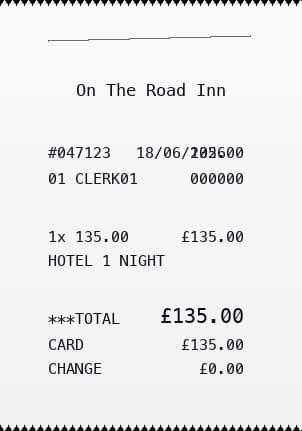
Not every cost starts with a purchase order or supplier invoice. Your team is still spending on travel, mileage, meals, hotels, parking, and project costs, often before finance ever sees the receipt.
AI Expenses helps employees capture receipts and submit claims quickly, while your policies guide what gets approved, flagged, coded, reimbursed, and exported.
Supplier spend and staff expenses are handled in separate flows, with the same financial control behind both.
Have you got month-end covered? 9 Days to go
Wrap up with ease with AI-driven automation.
Talk to SalesThe team and customer support are genuinely good people. They're always willing to help, they respond quickly, and they really try to understand things from our side instead of giving generic answers


Frequently asked questions
Answers to the common questions finance teams ask when they are replacing manual purchasing, invoice approvals, and disconnected payment workflows.
Accounts Payable Automation reduces manual entry, speeds up approvals, and improves accuracy. With Zahara, invoices are captured digitally, routed for approval automatically, and tracked from purchase order to payment. This saves time, reduces errors, and gives clear visibility of cash flow.
Once enabled, you will have an account with Currencies Direct. Transfer funds from your bank into currency wallets to buy and hold currencies. In Zahara, select approved invoices and pay from your chosen wallet. This gives you easier batch runs, competitive FX rates, and tighter control over outbound payments.
Zahara centralises the process from requisition to payment. Capture invoices, route them for approval automatically, match to POswhere needed, and keep a full audit trail. You'll cut manual entry, reduce errors, and shorten cycle times, with every step visible in one portal.
Yes. We have direct integrationswith many systems and can also export the data you need for file-based imports or API-driven workflows. We'll work with you to design the best approach—fully automated or a simple scheduled export—so invoices post cleanly into your finance system.
Zahara runs on Microsoft Azure. Data is encrypted at rest and in transit. We support single sign-on with Microsoft and two-factor authentication, with role-based access controls. We're Cyber Essentials Plus certified and undergo independent security testing every year.
Each business unit has a base currency, while POs and invoices can use any currency. Our invoice recognition detects currencies and handles most European languages. The reporting API exposes transaction data and historical exchange rates, so tools like Power BI can produce accurate, dated reports. For settlement workflows, see supplier payments.
